Experience
Where can you experience a piece of history live?
From the Pedagogical Academy to the Federal Parliament Building to the World Conference Center Bonn: This is where the Parliamentary Council once met, where the Federal Republic took its first steps in 1949, and where political history was made for decades. With the relocation of the parliament and the government to Berlin, a new chapter finally began. Today, people from all over the world gather at the World Conference Center Bonn to discuss the issues of tomorrow.
Did you know that Bonn became the capital of the Federal Republic of Germany by only a narrow margin? Did you know that the Bundesbüdchen kiosk has moved, and that the original still stands in the government district today – just in a different spot? Did you know that two of our Boarding Haus buildings are named after Theodor Heuss and his wife, Elly Heuss-Knapp?
Below, we give you a glimpse into the history of the Bundeshaus. Further down, you'll also find interesting details about our Boarding Haus on Heussallee and our Main Building.
From the Pädagogische Akademie (Academy of Education) to the Bundeshaus to the World Conference Center Bonn: where the Federal Republic was once governed, negotiations continue today.
Timeline
-
1930 – 1933
Construction of the Pädagogische Akademie in the Bauhaus style
-
1948 – 1949
The academy's auditorium serves as the meeting hall of the Parliamentary Council
-
1949
Hans Schwippert expands the academy with a plenary hall
-
May 10, 1949
Bonn is chosen, by a vote of 33 to 29, as the provisional seat of the federal government
-
September 7, 1949
The German Bundestag holds its first session in the plenary hall
-
November 3, 1949
The question of the capital is finally settled in Bonn's favor; the academy becomes the Bundeshaus
-
Early 1970s–198
Planning for a new plenary hall building; the old hall is demolished in 1987
-
1986–1992
Construction of the new plenary hall; members of parliament meet in the meantime at the neighboring Wasserwerk
-
October 30, 1992
Inauguration of the new plenary hall, designed by Günter Behnisch
-
July 1, 1999
The Bundestag's last session in Bonn
-
1996
UN institutions begin settling in Bonn
-
February 27, 2002
Bellevue Agreement: planning begins for the expansion of the congress center
-
2007
Groundbreaking for the expansion of the congress center; the IKBB (Internationales Kongresszentrum Bundeshaus Bonn) is given its current name: World Conference Center Bonn
-
June 2015
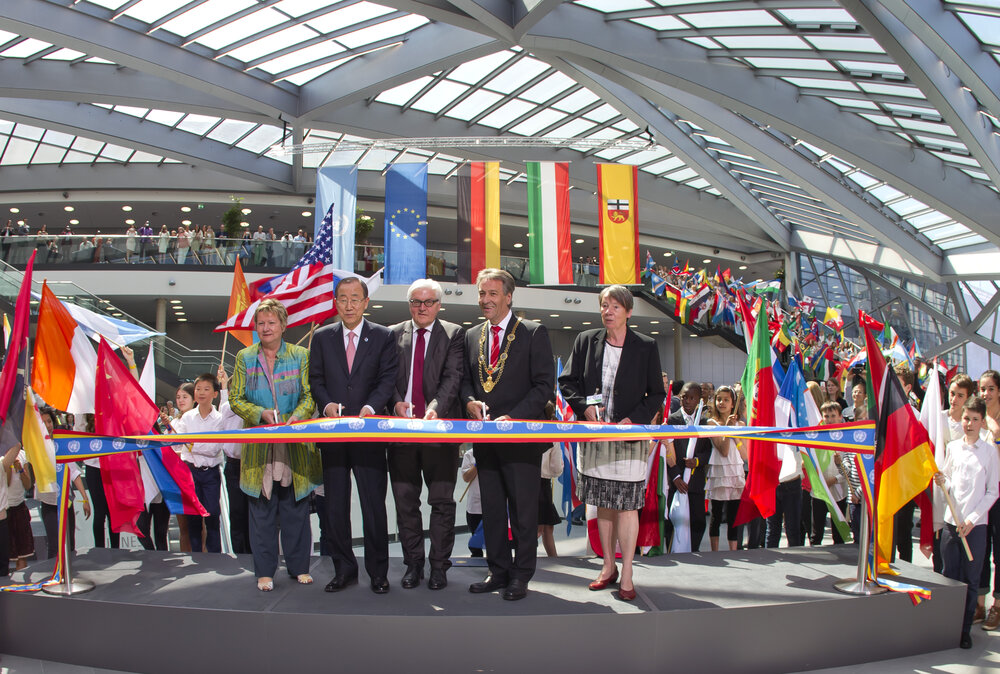
Official opening of the WCCB's Main Building; together, both buildings offer space for up to 7,000 guests
-
Late 2015
The Wasserwerk and Pumpenhaus are handed over to the United Nations
-
November 2017
The COP23 UN Climate Change Conference, with 22,000 participants from 190 countries — the largest international conference held in Germany to date
-
Present
The WCCB has hosted numerous events for many years. The building offers a wide range of options for hosting unique events—from conferences to gala events
Milestones in Depth
The Pädagogische Akademie
From 1930 to 1933, a newly established Pädagogische Akademie was built in Bonn on the grounds of what is now known as the Bundeshaus (part of which is the former plenary hall of the German Bundestag) — a building constructed in the Bauhaus style, with a gymnasium projecting to the south. From 1948 to 1949, the academy's auditorium served as the meeting hall of the Parliamentary Council.
The Plenary Hall by Hans Schwippert
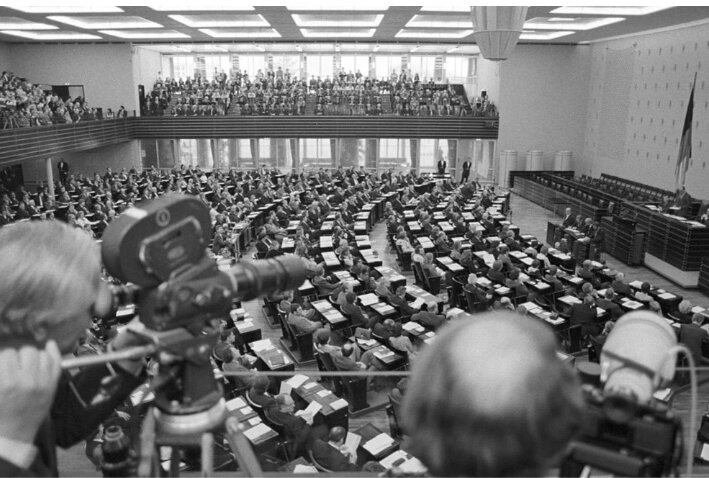
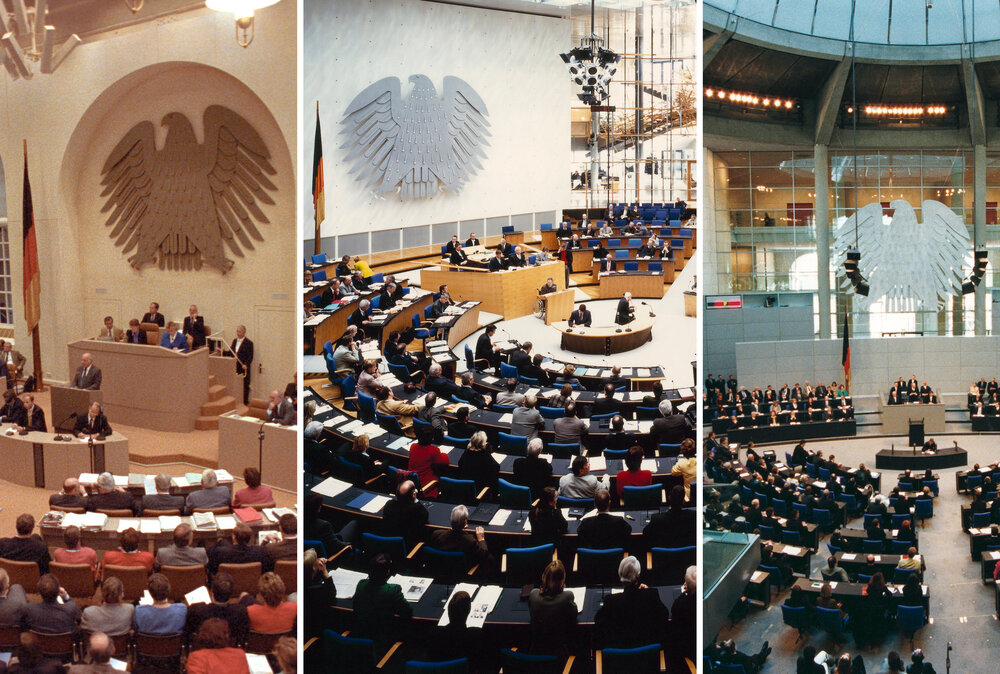
To get ahead of rival contender Frankfurt am Main in the race to become the seat of government, the city of Bonn commissioned Aachen-based architect Hans Schwippert in 1949 to expand the academy with a plenary hall. Within just a few months, adjoining the former gymnasium, which was converted into a foyer, he created a chamber for 520 members of parliament and a gallery for 400 visitors.
The First Parliamentary Session
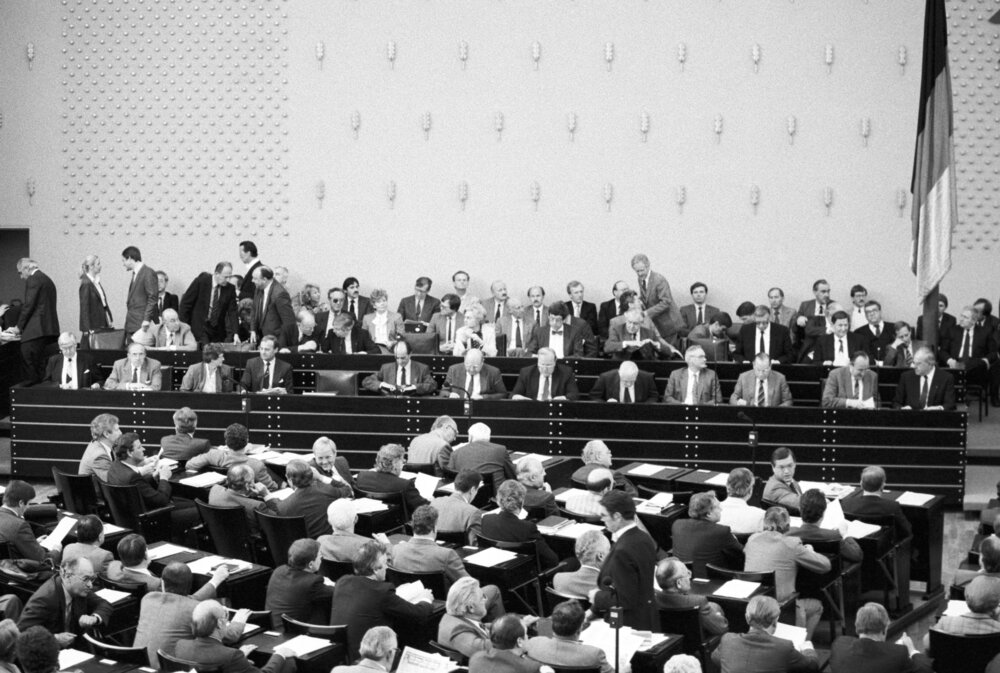
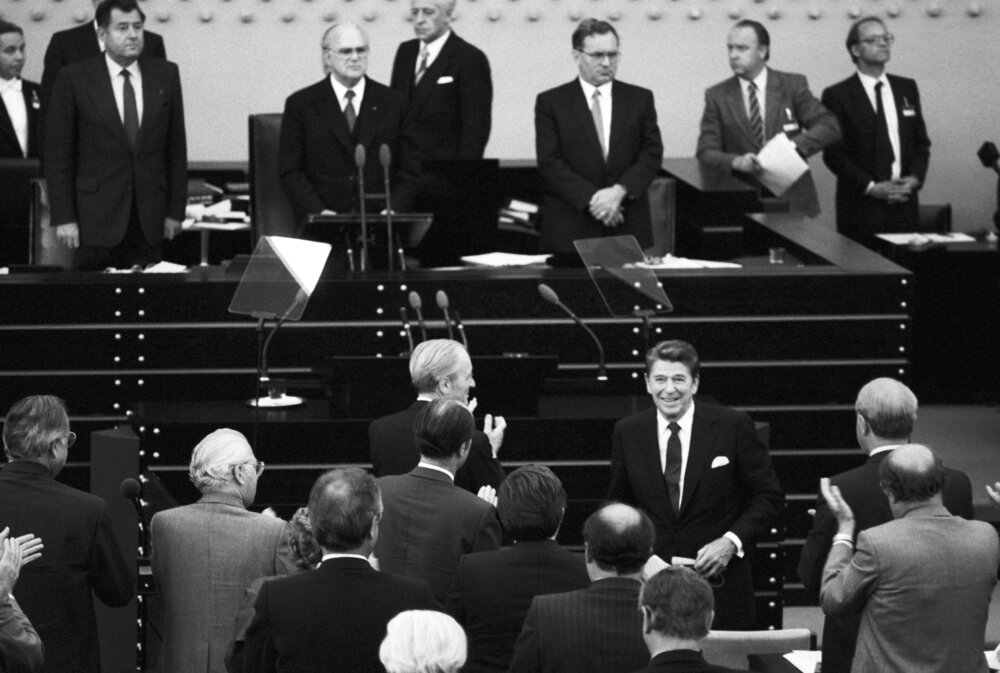
On May 10, 1949, two days after the Basic Law of the Federal Republic of Germany was adopted, Bonn won a majority in a secret vote of the Parliamentary Council, 33 to 29, and was thereby named the 'provisional seat of the federal government.' On September 7, 1949, the German Bundestag held its first session in the plenary hall.
The Bundeshaus
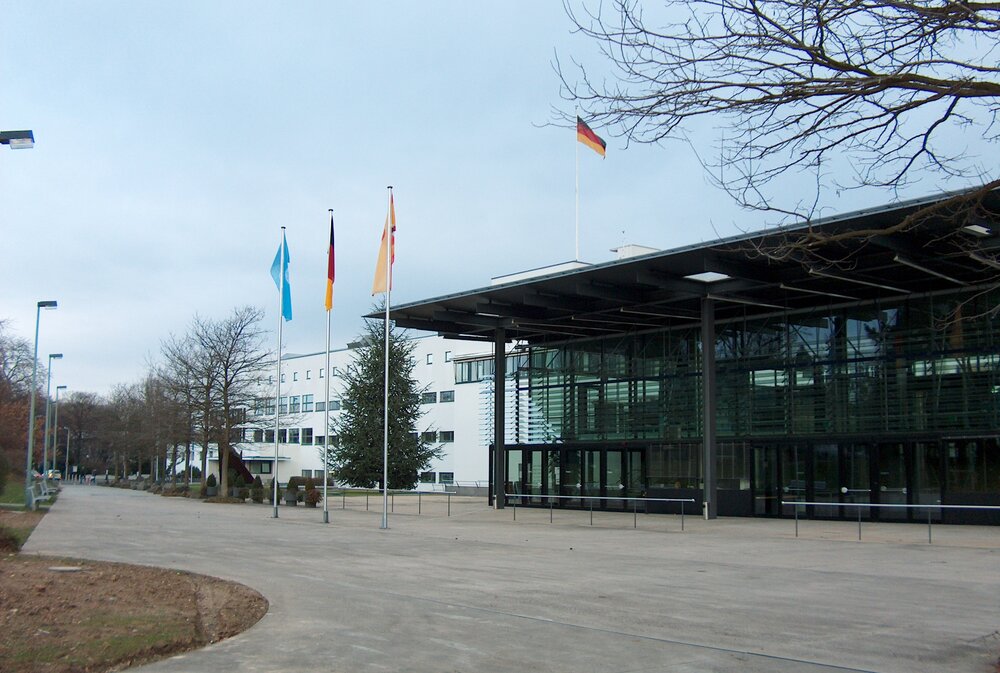
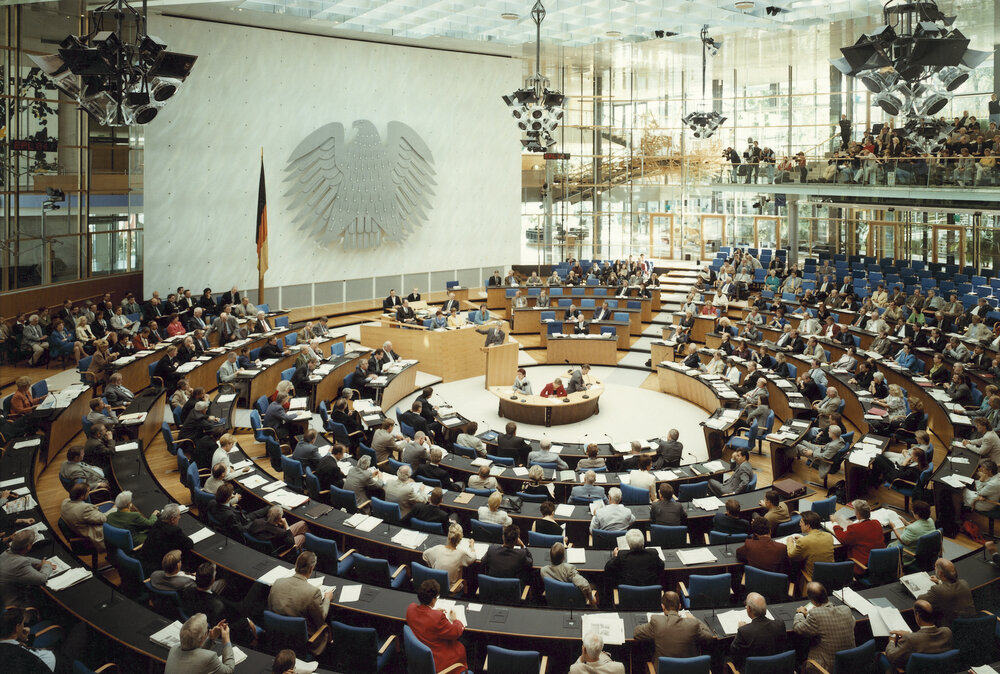
On November 3, 1949, the question of the capital was finally settled in Bonn's favor by the 1st German Bundestag. The academy became the Bundeshaus. The Bundesrat moved into the auditorium and remained there until the move to Berlin in 1999. The Bundestag met in the expanded former gymnasium of the Pädagogische Akademie until the mid-1980s; today, the plenary hall designed by Behnisch & Partner stands on that same spot.
The Plenary Hall by Günter Behnisch
The first plans for a new plenary hall building date back to the early 1970s. The Stuttgart-based architecture firm Behnisch & Partner won the 'Bundestag and Bundesrat' competition, on the condition that they revise their design once more. Planning and discussions dragged on for years, until members of parliament initially decided in 1981 to renovate the old, heritage-protected meeting venue instead. After further preliminary studies and debate, the old hall was ultimately demolished in 1987. A new building, along with an adjoining presidium building and restaurant, was to be constructed on the same site.
From the Wasserwerk, to the Plenary Hall in Bonn, to Berlin in 1999
Construction finally begins in 1988. After 20 years of planning and revisions, the plenary hall is inaugurated on October 30, 1992, following five years of construction. During construction, members of parliament met at the neighboring former Wasserwerk (1986–1992). It was there that the decision on German reunification was made, and it was there, on June 20, 1991, that the German Bundestag voted to move its seat to Berlin. On July 1, 1999, parliament held its last session in the plenary hall in Bonn.
Bonn – City of the United Nations
The settling of United Nations secretariats and institutions in Bonn began in 1996. Today, more than 26 United Nations organizations, employing around 1,000 people, are based on the UN Campus. A city that hosts the United Nations needs suitable conference infrastructure, including for large conferences of states parties.
The Expansion of the Congress Center
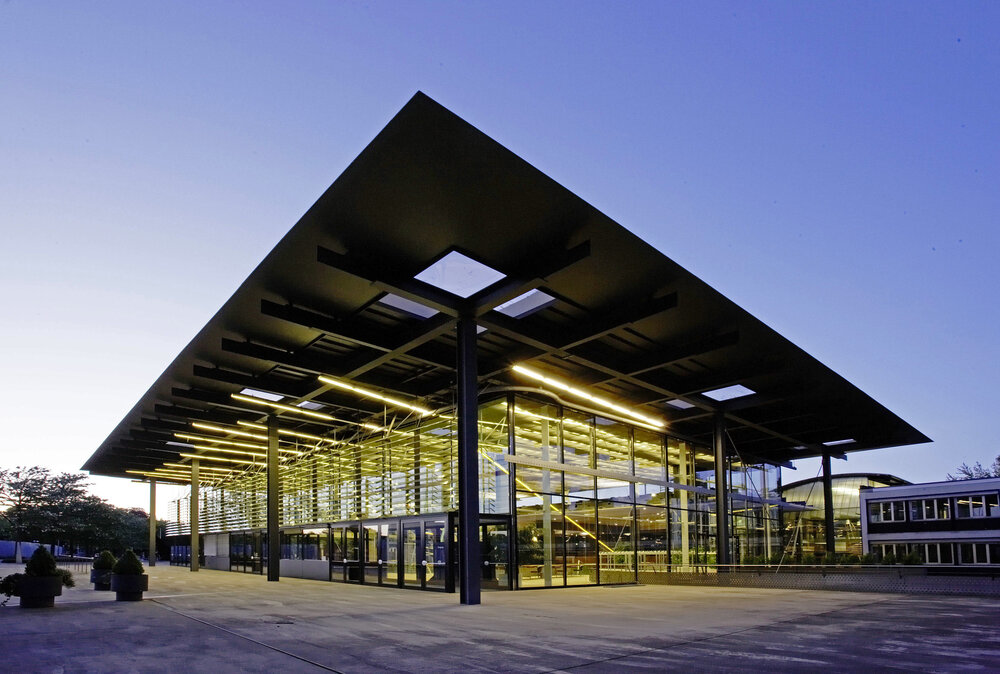
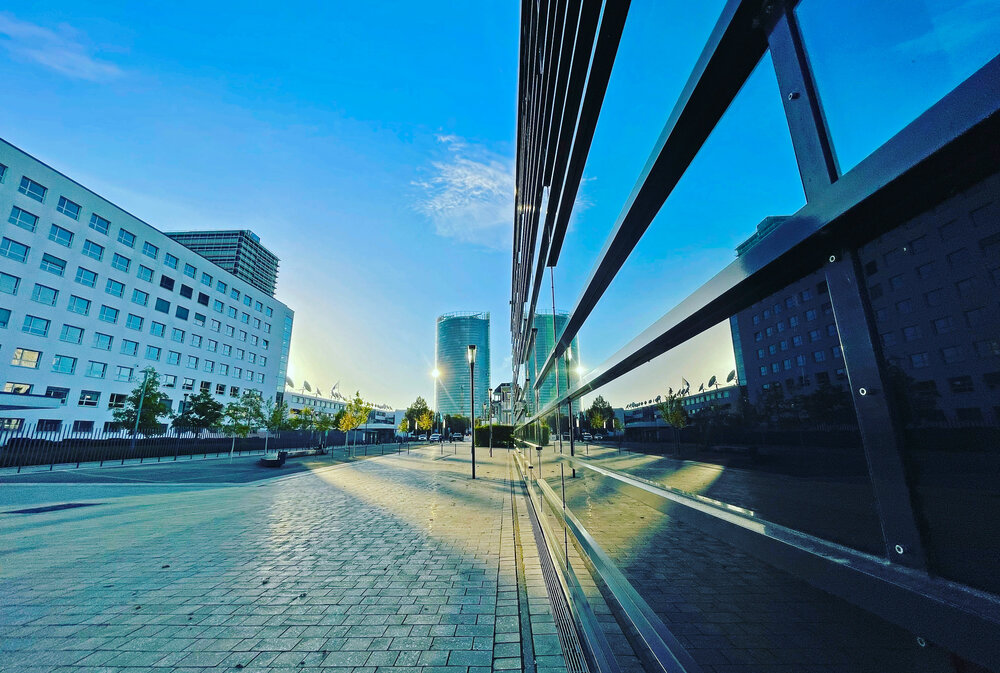
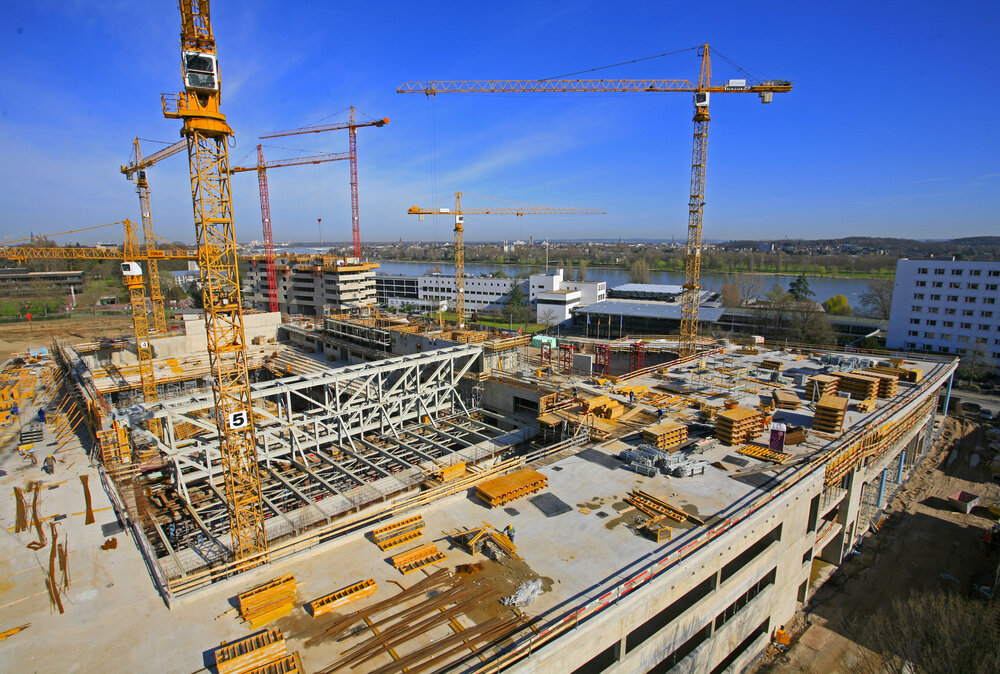
With the Bellevue Agreement, signed on February 27, 2002, planning began for an expansion of the Bonn congress center. Since 2015, the WCCB's Main Building has provided significantly expanded capacity for events of all kinds. Across its two buildings – the Plenary Building and the Main Building – the congress center offers space for events with up to 7,000 guests."
Bonn as an International Congress Destination
With the World Conference Center Bonn, the Federal City of Bonn has repeatedly shown that it's also well suited as a venue for large conferences. Examples include two UN climate summits, the International Conference on Freshwater, the Afghanistan Conferences, the International Conference for Renewable Energies, the UN Convention on Biological Diversity conference of the parties, and the G20 Foreign Ministers' Meeting. In November 2017, Bonn hosted the UN Climate Change Conference (COP23) – with 22,000 participants from 190 countries, the largest international conference held in Germany to date.
The Main Building
Until the 2000s, the site of the World Conference Center Bonn's (WCCB) Main Building was home to the Villa Dahm and the so-called Bundesbüdchen kiosk.
From 1955 onward, the Villa Dahm served as the seat of the Deutsche Parlamentarische Gesellschaft (German Parliamentary Society, DPG). When the DPG moved to Berlin, the federal government gifted the villa to the city of Bonn in 1999, and in May 2005, the decision was made to demolish the building — which had remained a listed heritage site until the end — to make way for the WCCB expansion on the site.
Just steps from the Villa Dahm, diagonally across from the entrance to the Bundesrat, stood the so-called "Bundesbüdchen" kiosk. From 1957 onward, the Rausch family ran this kiosk, where Bonn's political elite bought newspapers, comics, or bread rolls. Regular customers included numerous top politicians, members of parliament, and journalists from around the world. In 1981, after losing a bet on the TV show "Wetten, dass...?", Friedrich Nowottny sold sausages at the Bundesbüdchen for charity, serving one to Loki Schmidt, wife of then-Chancellor Helmut Schmidt. Herbert Wehner and Franz Josef Strauß were also regulars at the kiosk, and Helmut Kohl regularly sent his driver to pick up bread rolls there. In October 2006, the Bundesbüdchen had to make way for the planned WCCB expansion. It was put into storage until May 2020, when it found its current home at the corner of Heussallee and Platz der Vereinten Nationen.
In 1996, United Nations secretariats and institutions began settling in Bonn. A city that hosts the United Nations needs suitable conference infrastructure, including for large conferences of states parties. Following the signing of the Bellevue Agreement on February 27, 2002, planning began for the corresponding expansion of the Bonn congress center around the former plenary hall. After delays and a construction scandal, the WCCB's Main Building has provided significantly expanded capacity for events of all kinds since 2015. Today, across its two buildings – the Plenary Building and the Main Building – the congress center offers space for events with up to 7,000 guests.
History of the Members' Apartment Buildings on Heussallee
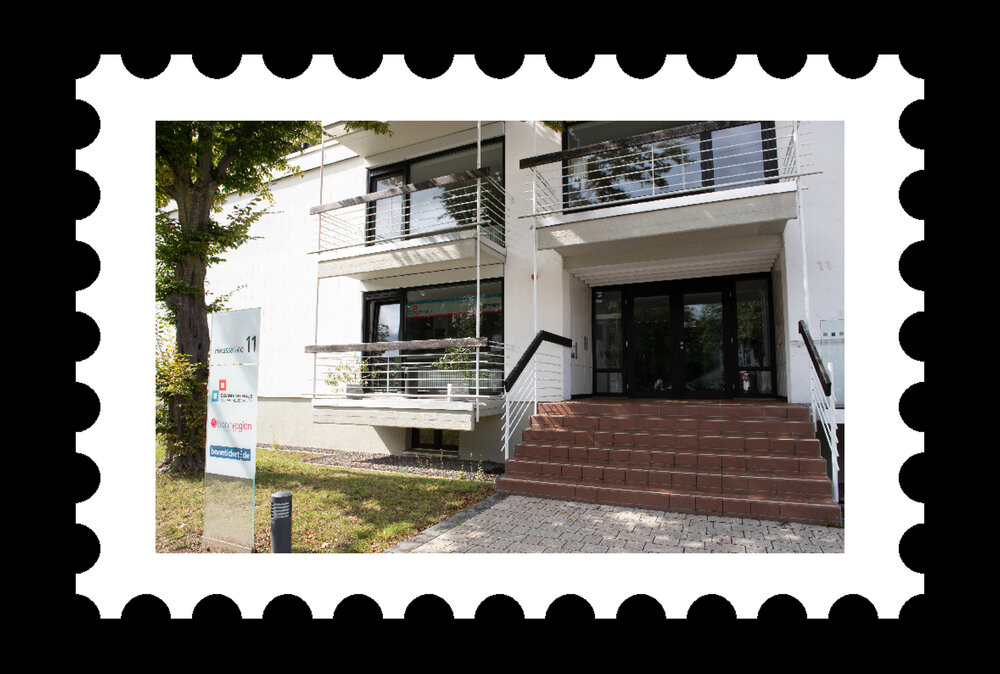
Between 1965 and 1966, three apartment buildings were constructed to house members of the German Bundestag on what was then Siebengebirgsstraße (today's Heussallee).
The two-story buildings, nearly square in floor plan, follow the cubic architectural style of the 1920s and 1930s. Flat roofs and whitewashed facades echo the "white architecture" of the former Pädagogische Akademie (later the Bundeshaus). Inside, the apartments are arranged around a central hall with a stairwell, lit from above by skylight domes. All apartments were furnished identically, and the original floor plans have remained largely intact to this day.
The building complex is set within a green landscape and marked by a sense of lightness and transparency – a defining feature of 1960s residential architecture.
The heritage-protected apartment buildings were home to members of parliament from all political groups until the Bundestag's move to Berlin in 1999.
Architect: Bundesbaudirektion (Federal Building Directorate) with the planning group Manfred Adams, Günther Hornschuh, Peter Türler, Georg Pollich (later Planungsgruppe Stieldorf). Landscape architect: Heinrich Radeschall
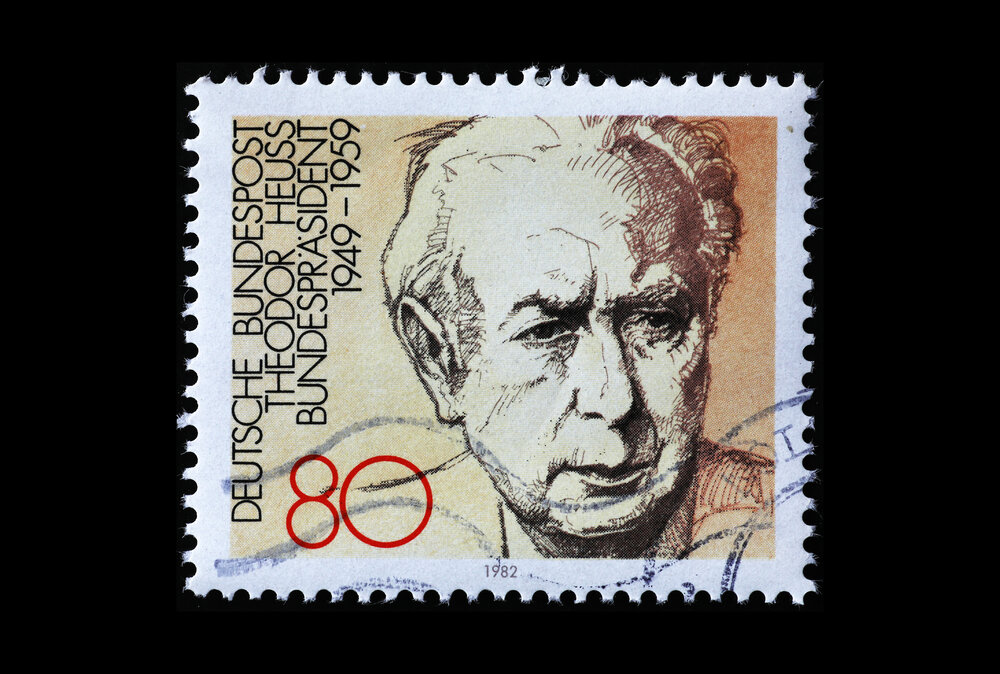
Boarding Haus on Heussallee – "Haus Theodor"
Theodor Heuss was an outstanding German politician and the first Federal President of the Federal Republic of Germany. Born on January 31, 1884, in Brackenheim, Heuss dedicated his life to democratic ideals, championing freedom, tolerance, and social justice.
During the Weimar Republic, Heuss worked as a journalist and writer. His political career began in the 1920s, when he became active in the German Democratic Party (DDP). After the Nazis seized power, he was forced to emigrate because of his political convictions.
After World War II, Theodor Heuss was one of the founding fathers of the new German democracy. As a member of the Parliamentary Council, he had a major influence on the wording of the new Basic Law. In 1949, Heuss was elected Federal President and held the office until 1959. As head of state, he championed Germany's integration into the international community, coming to terms with the past, and democratic reconstruction.
After leaving the office of Federal President, he continued to devote himself to social and cultural causes. He died on December 12, 1963, in Stuttgart.
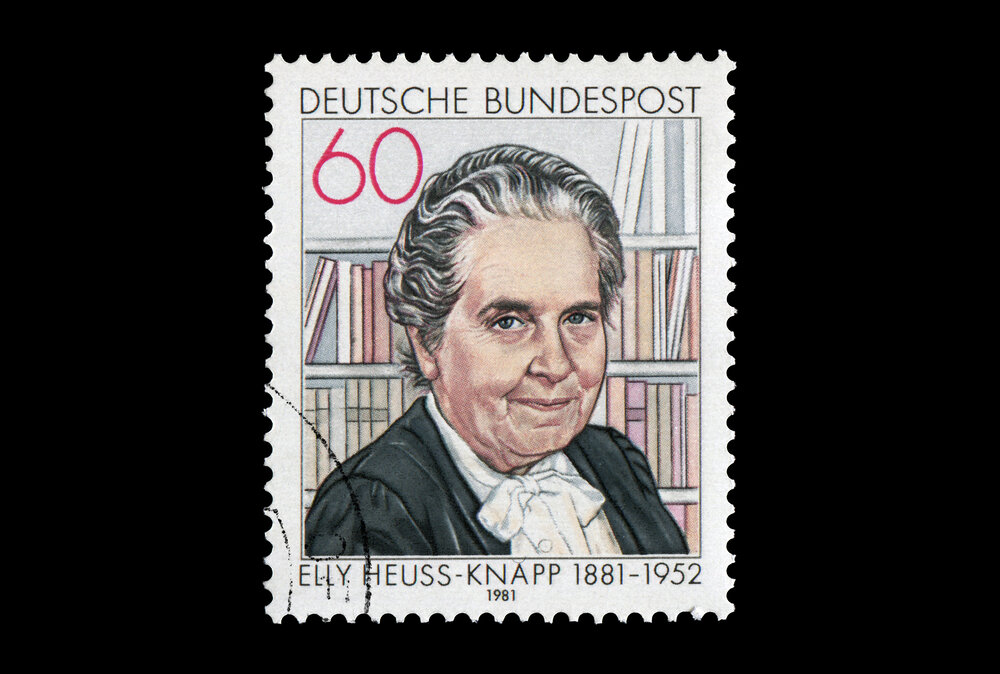
Boarding Haus on Heussallee – "Haus Elly"
Elly Heuss-Knapp was a remarkable German social policy advocate and the wife of the first Federal President of the Federal Republic of Germany, Theodor Heuss. Born on January 3, 1881, in Strasbourg, she devoted her life to social causes, with a particular focus on the concerns of women and children."
Full text: „Elly Heuss-Knapp was a remarkable German social policy advocate and the wife of the first Federal President of the Federal Republic of Germany, Theodor Heuss. Born on January 3, 1881, in Strasbourg, she devoted her life to social causes, with a particular focus on the concerns of women and children.
After World War II, Elly Heuss-Knapp played an important role in rebuilding German society. In 1949, she founded the Müttergenesungswerk, an organization dedicated to the recovery and health of mothers.
Elly Heuss-Knapp died on July 19, 1952, in Stuttgart, leaving behind a significant legacy in social policy. Her work is regarded as groundbreaking for the development of postwar social policy.
Note on the Images Shown on This Page
Please note that the images on this page have been selected and are shown for documentary purposes only. Reproduction, distribution, or use for any other purpose is expressly prohibited.
Sources for parts of this content:
www.bundestag.de · www.bundespraesident.de · www.wikipedia.org · www.hausaufderalb.de
Let's start a conversation.
We appreciate your interest in the WCCB! The BonnCC team is happy to assist you with any questions or requests you may have.